

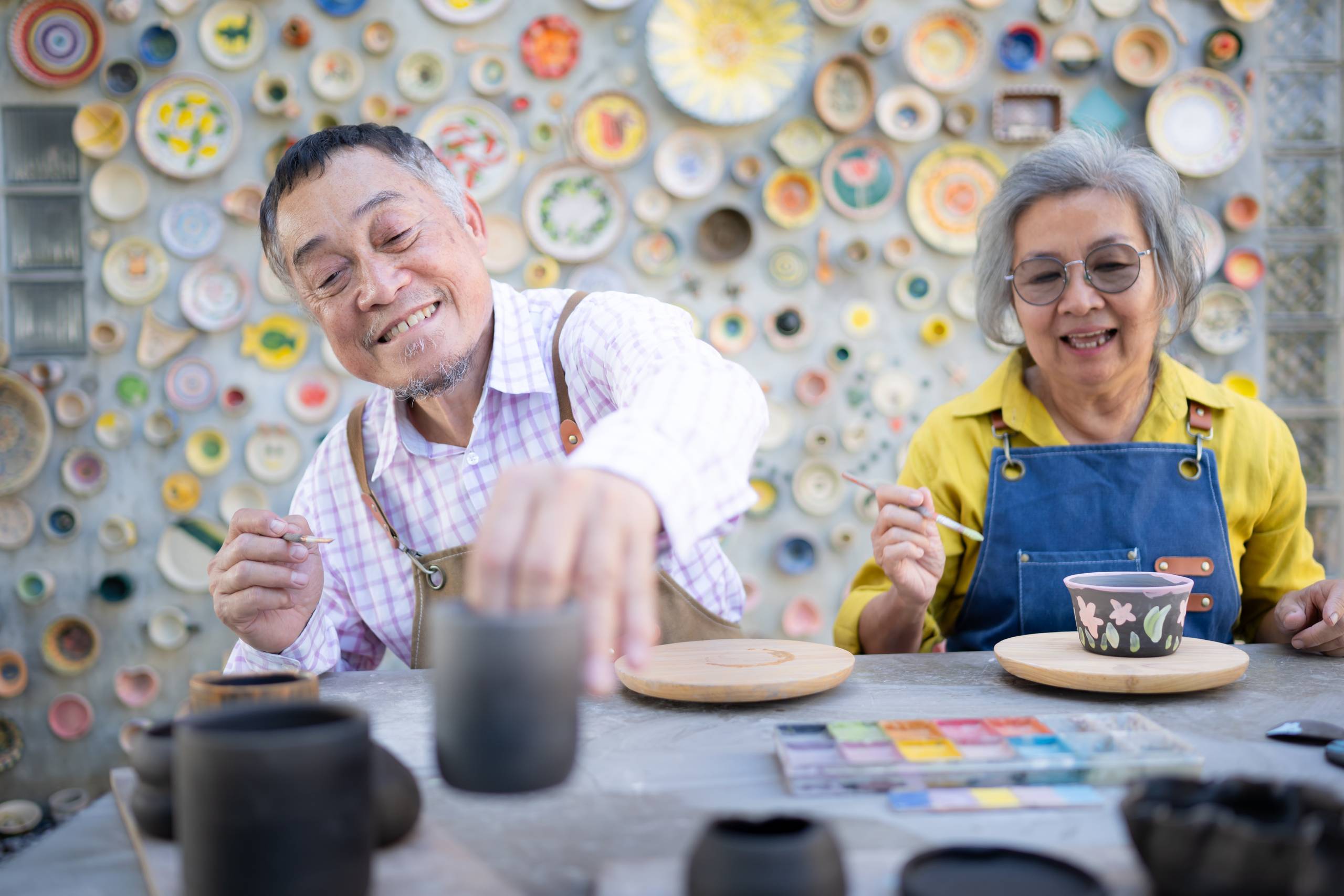
Firing is sometimes misconstrued as the last step in ceramics, when, in fact, it is a perpetuation of all the previous steps. If you hurry while throwing, trimming, or glazing, the kiln will not hide those mistakes. Instead, it will expose them. Patience must be exercised before you even load the kiln, and this is with drying time. When pieces are dry on the outside, they may still be wet on the inside. Ignoring this often imperceptible step will cause cracking or failure in the firing process.
Covers, fans, and time will need to be adjusted to prevent cracking. You will learn to be patient and pay attention to the work even when you are not handling it. You will also learn to manage things that you cannot really control, like the weather.
When it’s time to fire your pieces, patience manifests itself as faith. There’s a time frame in which the pieces need to fire, and, once you start, you cannot make the process go any faster. The fire will get hotter, the clay will change, and the pieces will harden as long as the firing schedule is observed. Opening the kiln at the wrong time or not allowing it to cool properly can affect the final product. Patience during the firing process will teach you to let go of things you cannot control.
Firing will also teach you to be consistent. Overcrowding the kiln, not leaving enough space between pieces, and not knowing how the heat moves through the kiln will all impact your final product. You will learn these things through trial and error and observation. Each firing is a direct result of the choices made beforehand. Patience in the firing process is not about waiting around; it’s about adhering to a strict discipline.
Through firing, you will learn that patience is about understanding timing. It’s not always important to rush around and get things done as fast as you can. Sometimes you just have to let things take care of themselves. This lesson will serve you well as you continue to make ceramics, because so much of the craft is about progression rather than immediacy.